
Introduction
As a business grows, the need for physical space grows along with it. Inventory increases, equipment gets added, documents accumulate, and office furniture may expand as new employees join the team. What begins as a small collection of business belongings can eventually occupy valuable areas of an office, shop, warehouse, or workspace. When storage starts taking over operational areas, employees may have less room to work and everyday activities can become harder to manage.
Not every business item needs to be accessed every day. Extra stock may be waiting for future orders, equipment may be required only occasionally, and documents may need to be retained for years without occupying valuable workspace. Instead of allowing these belongings to fill the office, businesses can consider dedicated external storage.
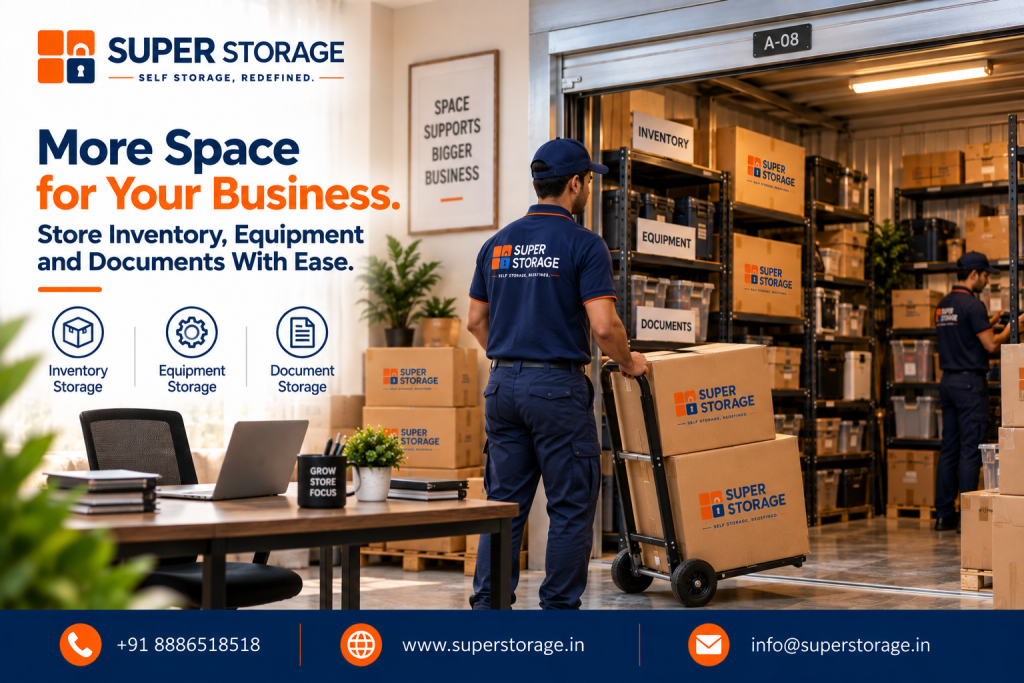
SuperStorage helps businesses create additional room by providing storage solutions for inventory, equipment, documents, furniture, and other business belongings. By moving items that are not required every day into a dedicated storage space, businesses can continue using their existing workplace more efficiently while keeping important assets available for future requirements.
Why Businesses Need Additional Storage Space
Business storage requirements can develop gradually. A company may begin with a small inventory area, but as sales increase, the available space can quickly become insufficient. Office equipment may also accumulate as the business expands. Old computers, monitors, printers, chairs, desks, display materials, packaging supplies, and other assets may still have future value even when they are not currently being used.
Documents create another storage challenge. Businesses often need to retain contracts, invoices, records, reports, project files, and other paperwork according to their operational or legal requirements. Keeping years of documents inside an active office can consume cabinets, shelves, and entire rooms.
External storage provides an additional option. Instead of making the workplace responsible for every storage requirement, businesses can separate everyday operations from belongings that only need occasional access.
Store Inventory Without Crowding Your Workspace
Inventory is one of the most common reasons businesses need additional space. As product volumes increase, cartons and boxes can begin occupying areas intended for employees, customer interactions, or daily operations.
A crowded inventory area can also make it harder to locate specific products. When stock is stored without a clear system, employees may spend additional time searching for items or moving boxes around to reach the required products.
Using an external storage facility can provide additional capacity when the existing business premises are limited. Businesses can organise inventory by category, product type, or frequency of movement and maintain a record of what has been placed into storage.
SuperStorage can help businesses discuss their inventory storage requirements and determine an appropriate arrangement based on the type and quantity of goods involved.
Keep Spare Equipment Outside the Everyday Workspace
Businesses often retain equipment that is not needed every day. Backup computers, monitors, printers, office chairs, display units, tools, event equipment, and other operational assets may be required occasionally.
Keeping all of this equipment inside an active office can reduce available workspace. Employees may have to work around unused items, while meeting rooms or storage areas may become crowded.
Moving rarely used equipment into external storage can create more room without requiring the business to dispose of assets that may become useful later. When equipment is needed, it can be retrieved according to the applicable storage and access arrangements.
Before storing specialised equipment, businesses should discuss dimensions, handling requirements, access needs, and any specific storage conditions with the provider.
Manage Business Documents More Efficiently
Documents can accumulate over many years. Financial records, invoices, employee documents, contracts, project files, reports, purchase records, and other paperwork may need to be retained even when they are no longer accessed regularly.
Keeping every document inside an active office can consume valuable cabinet and floor space. It can also make document management more difficult when older records are mixed with current files.
External document storage can help businesses separate frequently accessed records from archived materials. Current documents can remain within the office, while older records can be organised, labelled, and placed into storage.
Businesses should ensure that their document-storage process follows their own retention, confidentiality, and access requirements. Sensitive records should be handled according to applicable company policies and legal obligations.
Create Space as Your Team Grows
Business growth often means adding employees. New employees need desks, chairs, computers, workstations, and other resources. If the office is already occupied by excess inventory and unused equipment, creating new workstations can become difficult.
Instead of immediately searching for a larger office, businesses can first review how their existing space is being used. Items that are rarely needed can be moved into external storage, allowing the workplace to focus on current operations.
This can be particularly useful for businesses that are growing gradually. Rather than expanding office space simply because stored belongings have taken over available areas, companies can create additional capacity by separating storage from everyday work.
Store Promotional and Event Materials
Marketing activities can also create significant storage requirements. Businesses may accumulate banners, display stands, brochures, promotional merchandise, exhibition equipment, branded materials, and event decorations.
These items can be valuable for future campaigns but may not be required every week. Keeping them inside the office can turn meeting rooms, cupboards, and work areas into temporary storage zones.
External storage allows businesses to retain promotional assets without allowing them to interfere with everyday operations. Items can be organised by campaign or event and retrieved when required.
SuperStorage can provide additional space for businesses managing such occasional-use materials, subject to the applicable storage arrangements.
Make Office Renovation Easier
Office renovations can create temporary storage problems even when a business normally has enough space. Furniture, computers, documents, equipment, and other belongings may need to be moved while flooring, painting, interiors, electrical work, or other improvements are carried out.
Moving everything into another part of the office may simply transfer the problem from one room to another. External storage can provide temporary space while the renovation takes place.
Once the work is completed, the required belongings can be brought back and arranged in the redesigned workspace. This can help businesses continue the renovation without having stored belongings interfere with the project.
Support Business Relocation
Moving between offices can be complicated when there are large quantities of inventory, equipment, furniture, and documents involved. Sometimes the new office is not ready when the old lease ends, creating a gap between the two locations.
External storage can act as a temporary bridge during this period. Businesses can move selected items into storage instead of transporting everything between temporary locations.
SuperStorage can help businesses manage additional space during such transitions. The exact storage and movement arrangements can be discussed according to the type and quantity of business belongings involved.
How SuperStorage Helps Businesses Create More Space
SuperStorage provides storage solutions that allow businesses to move selected belongings outside their primary workspace. The process can begin with identifying which items are used frequently and which can be stored elsewhere.
Inventory, equipment, furniture, documents, promotional materials, and other belongings can be organised before transportation. Businesses can then discuss their requirements with SuperStorage to determine the appropriate storage arrangement.
Pickup and delivery support can make the movement of belongings more convenient, depending on the applicable service and item requirements. This can be particularly helpful when businesses have multiple boxes, bulky equipment, or furniture that may be difficult to move independently.
The purpose is to help businesses separate storage requirements from operational requirements. Employees can focus on their work while less frequently used belongings remain organised in a dedicated location.
Organise Your Inventory Before Storage
External storage works best when businesses maintain an organised system. Inventory should be labelled and grouped so that employees can identify items quickly. A basic inventory record can include product names, quantities, box numbers, and storage locations.
For equipment, businesses can maintain records containing model numbers, serial numbers, or other identification details. Photographs can also be useful for documenting the condition of equipment and furniture before storage.
Documents should be organised according to the company’s existing filing and retention systems. Clearly labelled boxes can make future retrieval more efficient.
This preparation can reduce the time required to locate specific belongings and make the storage process easier to manage as the business grows.
Keep Your Office Focused on Business
An office should primarily support the people and activities that keep a business running. When too much space is occupied by inventory, unused furniture, equipment, or archived documents, employees may have less room to perform their everyday responsibilities.
Moving selected belongings into external storage can help return the workplace to its primary purpose. Meeting rooms can be used for meetings, workstations can remain clear, and operational areas can be easier to navigate.
For growing businesses, this separation can provide additional flexibility. Instead of allowing stored belongings to determine how the office is used, businesses can decide how their workspace should function and use external storage for items that do not need immediate access.
Storage Can Adapt to Changing Business Needs
Business storage requirements are rarely permanent. Inventory may increase during a particular season and decrease afterward. Equipment may be needed during an expansion and become unnecessary later. An office relocation may require temporary storage for a few months.
External storage can provide flexibility during these changes. Businesses can use additional space when their operational requirements exceed the capacity of their current premises.
SuperStorage can help businesses discuss changing storage requirements and identify suitable options based on their needs. Customers should confirm the applicable duration, access arrangements, storage conditions, and handling requirements before making a storage decision.
Conclusion
A growing business needs room to grow, but that space does not always have to come from a larger office. Inventory, equipment, documents, furniture, promotional materials, and other business belongings can gradually occupy valuable areas that employees need for everyday operations.
External storage provides a practical way to separate business operations from storage requirements. By moving less frequently used belongings into a dedicated storage facility, companies can create more workspace while retaining assets they may need in the future.
SuperStorage helps businesses manage these requirements through dedicated storage solutions and pickup and delivery support, depending on the applicable service. Whether you need additional room for inventory, archived documents, spare equipment, office furniture, or promotional materials, discussing your requirements in advance can help you choose an appropriate storage arrangement.
More space can give your business more room to operate, organise, and grow. Store what your business needs, keep your everyday workspace clear, and use your office for what it does best—running your business.