
Introduction
As homes become more compact and businesses continue to grow, finding enough space for belongings, furniture, equipment, and inventory can become a challenge. Whether you are renovating your home, relocating to another city, managing excess business stock, or simply trying to organise your surroundings, you may find yourself looking for additional space. Two common options are using professional storage services or renting extra residential or commercial space.
Although both options provide additional room, they serve different purposes. Renting an additional property gives you a separate space that you can use for various activities, while storage services offer a dedicated arrangement for keeping belongings that you do not currently need. Choosing between them depends on how much space you require, how long you need it, what you plan to keep, and how frequently you need access to your belongings.
Understanding the differences can help you make a more informed decision. With solutions from SuperStorage, individuals and businesses can explore convenient ways to manage excess belongings without immediately committing to a larger property or additional rental premises.
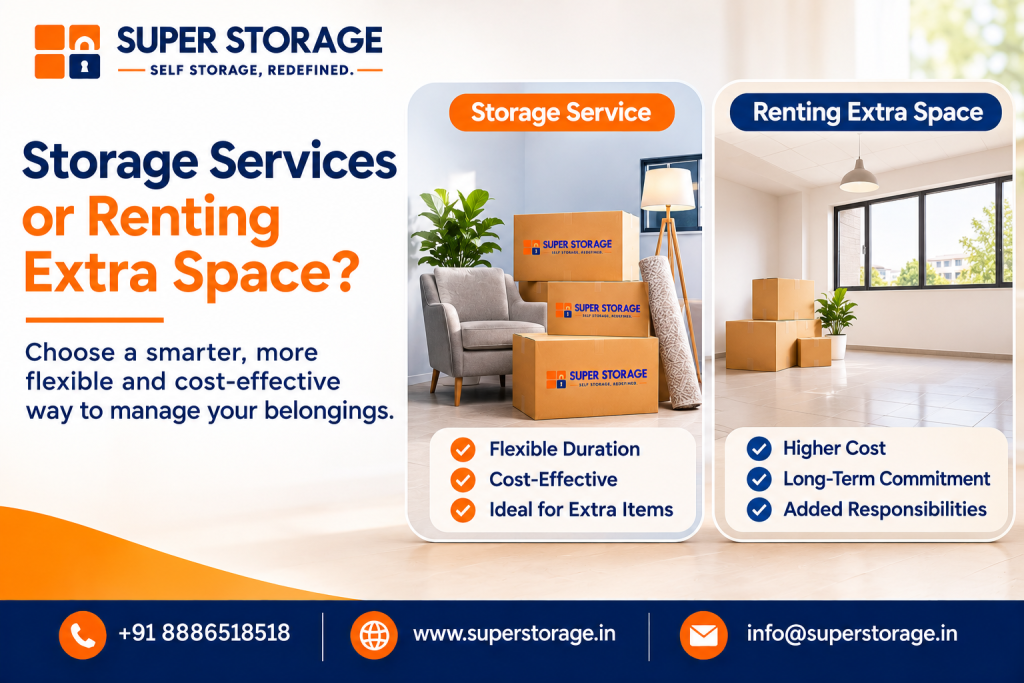
Understanding Professional Storage Services
Professional storage services are designed for people who need additional space to keep their belongings for a temporary or extended period. Instead of renting an entire apartment, house, office, or warehouse, you use a designated storage arrangement based on your requirements.
These services can be useful for storing household furniture, seasonal belongings, office equipment, business inventory, and other accepted items. For example, a family renovating its apartment may need somewhere to keep sofas, beds, and cupboards until the work is completed. Similarly, a business experiencing temporary excess inventory may require additional space without increasing its regular operating premises.
SuperStorage helps customers explore storage options according to their requirements. Rather than committing to a larger property simply to accommodate belongings that are not used every day, customers can consider a storage arrangement that suits the quantity and duration of their storage needs. The available services, accepted items, and terms can be discussed before booking.
Understanding the Option of Renting Extra Space
Renting extra space involves leasing another property or a portion of a property to accommodate your requirements. This could be an additional apartment, a small office, a commercial unit, or a warehouse. Unlike a dedicated storage arrangement, rented premises may allow you to use the space for several purposes, depending on the property and its rental agreement.
For individuals, renting another room or apartment may be useful when additional living space is required. For businesses, leasing a warehouse or commercial unit may be necessary when operations expand, more employees are hired, or inventory management requires a larger working area.
However, renting additional premises generally involves responsibilities beyond simply keeping belongings somewhere. Depending on the agreement, tenants may need to manage rental deposits, monthly payments, electricity, maintenance, utilities, and other property-related expenses. Therefore, it is important to evaluate whether you genuinely need an additional operational space or only somewhere to keep items that are not currently required.
Comparing the Overall Cost
Cost is one of the most important factors when choosing between storage services and renting extra space. The financial difference depends on the location, size, duration, and terms of the arrangement.
Renting a separate property may involve an initial security deposit, monthly rent, maintenance charges, utility bills, and other recurring expenses. If you are using only a small portion of the rented property to keep furniture or inventory, you may end up paying for more space than you actually need.
Storage services can be a practical alternative when the primary requirement is keeping belongings rather than using the premises for daily activities. Customers can discuss the available storage options and pricing based on their requirements. At SuperStorage, the aim is to help customers consider a suitable arrangement for their belongings instead of automatically taking on the financial responsibility of another property.
Before making a decision, compare the complete cost over the period you expect to need the space. Consider additional expenses, service charges, transportation, and any applicable conditions rather than comparing monthly rent alone.
Evaluate How Long You Need the Additional Space
The duration of your requirement can significantly influence your decision. If you need extra space for only a few weeks or months, renting an entire property may not be the most practical approach.
For example, homeowners may require temporary space while their apartments are being renovated. People moving between rental homes may also need somewhere to keep their furniture until their new property is ready. In these situations, storage services can provide an option for managing belongings during the transition.
On the other hand, if you require a permanent workspace, an additional office, or a warehouse for continuous business operations, renting a separate property may be more appropriate. The key is to identify whether the requirement is temporary or ongoing.
SuperStorage can help customers explore storage arrangements for different durations, depending on available plans and service terms. Discussing the expected storage period in advance can help you select an option that matches your situation.
Consider How Frequently You Need Access
Another important difference is how you intend to use the additional space. If you need to visit the premises regularly, work from the location, manage employees, or handle inventory throughout the day, renting extra commercial space may be more suitable.
However, if you only need to keep belongings that are not required for everyday use, a storage service may be more convenient. Household furniture, extra appliances, seasonal decorations, and certain business records may not need frequent access. Keeping these items in a dedicated storage arrangement can help reduce clutter in your primary living or working environment.
Before choosing a storage service, confirm its access arrangements, operating hours, retrieval process, and any applicable conditions. SuperStorage helps customers understand the available arrangements so they can make a decision based on how often they expect to retrieve their belongings.
Identify the Type and Quantity of Items
The nature of the belongings you want to accommodate should also influence your decision. Furniture, household appliances, office chairs, desks, documents, and business inventory may require different amounts of space and preparation.
For example, a family storing unused furniture may not need an additional apartment. A storage arrangement could be sufficient if the items are accepted and the available space meets their requirements. Similarly, a small business with excess promotional materials, packaging supplies, or seasonal stock may benefit from considering storage instead of immediately leasing a larger warehouse.
However, businesses storing large quantities of frequently accessed inventory may need a dedicated warehouse where employees can regularly receive, organise, pick, and dispatch products. In this situation, renting commercial space may better support daily operations.
SuperStorage helps customers assess their storage requirements by considering the type and quantity of belongings involved. Providing an accurate estimate of the items before booking can make it easier to understand the space required and discuss suitable options.
Consider Convenience During Relocation and Renovation
Major life changes often create temporary space requirements. Relocating to a new home, renovating an existing apartment, travelling for an extended period, or shifting an office can make it difficult to manage all your belongings at once.
Renting additional premises during these situations may introduce another property agreement and additional responsibilities. Storage services can offer an alternative when the main requirement is to keep belongings until they are needed again.
For example, someone relocating to Bangalore for a new job may not immediately have access to a permanent home. Instead of renting a larger property just to accommodate furniture and household items, they can explore a suitable storage arrangement. Similarly, businesses shifting offices can consider storing furniture and equipment while their new workspace is being prepared.
SuperStorage supports customers who need to manage belongings during such transitions by helping them explore available storage options. Planning the storage period, preparing an inventory, and discussing pickup or delivery arrangements, where available, can make the process easier to coordinate.
Understand the Responsibilities Involved
Renting extra property often requires you to manage the premises yourself. This may include arranging utilities, maintaining the property, coordinating repairs, and ensuring that the space is used according to the rental agreement. These responsibilities can become time-consuming, particularly when the property is being used only to keep additional belongings.
Storage services generally focus on accommodating accepted items according to the agreed service terms. However, customers should still understand the provider’s conditions, including item restrictions, access arrangements, payment terms, storage duration, and retrieval procedures.
Before choosing SuperStorage, customers should discuss their requirements and confirm the available services, applicable charges, and conditions. Understanding these details in advance helps avoid confusion and ensures that the selected arrangement matches the intended purpose.
When Is Renting Extra Space the Better Choice?
Renting extra space is generally more suitable when you need a functional extension of your existing home or business. If your family requires another bedroom, your company needs additional office desks, or your operations involve regular warehouse activities, a separate property may provide the flexibility you need.
It can also be a practical long-term decision when the requirement is consistent and the additional space contributes directly to everyday activities or business operations.
However, if the property is being considered mainly to accommodate items that are rarely used, it is worth comparing the cost and convenience of professional storage services before signing a rental agreement.
When Should You Consider SuperStorage?
SuperStorage can be considered when your primary requirement is to manage belongings that occupy valuable space in your home, office, or business premises. Instead of immediately moving into a larger property, you can explore storage options for items that are not needed every day.
Homeowners can consider this option during renovation, relocation, decluttering, or changes in family requirements. Working professionals can explore storage arrangements when travelling or temporarily moving between cities. Businesses can consider additional storage for excess inventory, office furniture, equipment, and other accepted items.
SuperStorage helps customers explore suitable arrangements based on the belongings they need to store and the expected duration. By discussing the requirements beforehand, customers can understand the available options and choose an arrangement that supports their space-management needs.
Conclusion
Choosing between storage services and renting extra space depends on what you need the space for, how long you need it, and how frequently you expect to use it. Renting an additional property may be appropriate when you require a functional living area, workspace, or warehouse for regular activities. However, when your main objective is to accommodate furniture, household belongings, equipment, or excess inventory, professional storage services may offer a more practical alternative.
Before making a decision, evaluate the overall cost, duration, accessibility, quantity of belongings, and responsibilities involved. Avoid committing to an additional property when a dedicated storage arrangement could meet your actual requirements.
With SuperStorage, individuals and businesses can explore convenient ways to manage their additional belongings and make better use of their existing spaces. The right choice is not always about finding more space; it is about choosing the right kind of space for your needs.