
Introduction
Starting and managing a small business involves making several important decisions about space, expenses, inventory, and daily operations. Whether you run an online store, a retail business, a consultancy, or a growing startup, having enough space to manage your business belongings is essential. As operations expand, businesses often accumulate product inventory, office furniture, packaging materials, documents, equipment, and promotional items that require additional space.
For startups and small businesses operating with limited budgets, renting a larger office or warehouse may not always be a practical decision. At the same time, keeping excess inventory and unused equipment inside the workplace can make the environment crowded and reduce the space available for everyday activities.
This is where business storage solutions can become useful. They provide an additional space option for belongings that do not need to remain within the office or commercial premises. SuperStorage helps startups and small businesses explore storage options based on their requirements, available space, and expected duration. With proper planning, businesses can manage their belongings more efficiently while focusing on growth.
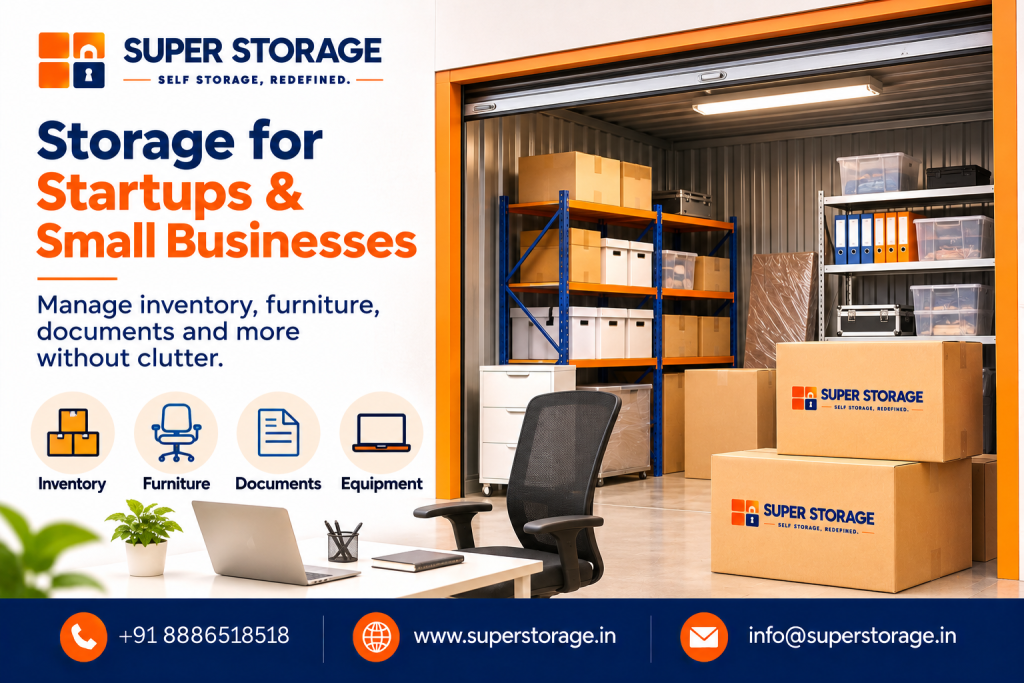
Why Startups and Small Businesses Need Additional Storage
During the early stages of a business, workspace requirements may appear manageable. A small office, home office, or compact commercial unit may be sufficient for a limited team and a small quantity of inventory. However, as the business develops, the amount of equipment, stock, documents, and operational materials usually increases.
For example, an e-commerce startup may begin with a few product categories but gradually expand its inventory. A marketing agency may accumulate computers, cameras, promotional materials, and event equipment. A retail business may need additional space for seasonal products and packaging supplies.
Keeping everything within the workplace can affect organisation and productivity. Employees may have less room to work, important items may become difficult to locate, and valuable office space may be occupied by materials that are not required every day.
SuperStorage offers storage solutions that businesses can explore when they need additional space for eligible business belongings. This can help startups manage growing storage requirements without immediately committing to a larger commercial property.
Manage Excess Inventory Without Expanding Your Premises
Inventory management is one of the biggest challenges for startups and small businesses, particularly those involved in retail, wholesale, and e-commerce. Maintaining sufficient stock is important for meeting customer demand, but storing every product inside a small office or shop can quickly become difficult.
Businesses may also experience seasonal fluctuations in inventory. During festive periods, promotional campaigns, and special sales events, stock levels may increase significantly. After these periods, excess products and packaging materials can continue occupying valuable space.
A practical approach is to separate regularly moving inventory from surplus or seasonal stock. Products required for daily operations can remain accessible, while eligible excess inventory can be considered for a separate storage arrangement.
Before choosing a storage option, businesses should understand the accepted-item policy, facility conditions, access procedures, and handling requirements. SuperStorage can help businesses explore available storage arrangements based on the quantity and type of inventory they need to store.
Store Office Furniture During Expansion or Renovation
Startups frequently change their office layouts as teams grow and operational requirements evolve. A business that initially operates with five employees may eventually require additional desks, meeting areas, workstations, and equipment.
During this transition, old office furniture may no longer fit the new layout. However, businesses may not want to sell or dispose of furniture that could be useful later. Similarly, office renovation and relocation may require furniture to be moved temporarily.
Storage can provide an additional space option for desks, chairs, cabinets, tables, partitions, and other office belongings that are not currently required.
Before arranging storage, clean the furniture and dismantle suitable components where possible. Use appropriate protective materials for polished surfaces, glass sections, and delicate parts. Keep screws and fittings together in labelled containers to make reassembly easier.
SuperStorage helps businesses explore furniture storage options based on their space requirements and the selected service. This can be useful when reorganising an office or managing furniture during a temporary relocation.
Organise Business Documents and Physical Records
Even businesses that use digital tools continue to maintain physical paperwork. Contracts, invoices, purchase orders, tax-related documents, employee records, supplier agreements, and financial statements may need to be retained for specific periods.
As the business grows, these documents can accumulate and occupy filing cabinets, shelves, and storage rooms. Keeping old records alongside frequently accessed documents can make everyday office administration difficult.
Businesses can improve document management by separating active records from archived files. Frequently used documents should remain accessible within the office, while records that need to be retained but are not required regularly can be organised separately.
Use labelled cartons and maintain a document inventory that records the department, document category, financial year, and carton reference. Before transferring records, confirm applicable retention requirements and confidentiality obligations.
SuperStorage offers storage solutions that businesses can explore for physical records and other eligible belongings. This can help organisations manage archived documents without allowing them to occupy valuable working space.
Store Packaging Materials and Promotional Items
Packaging materials are essential for businesses that sell physical products. Cartons, shipping boxes, bubble wrap, labels, tapes, product inserts, and protective packaging supplies may need to be purchased in bulk to manage operating costs.
However, maintaining large quantities of packaging materials inside a small office or shop can create clutter. Promotional banners, exhibition displays, marketing standees, event materials, and seasonal branding accessories can also occupy considerable space between campaigns.
Businesses can organise these materials according to their usage frequency. Supplies required for daily dispatch operations should remain accessible, while additional packaging stock and promotional materials that are not needed immediately can be considered for storage.
Proper labelling and inventory tracking are important to avoid confusion when materials are required again. SuperStorage can help businesses understand the available storage options for eligible packaging supplies and promotional belongings based on their requirements.
Support E-Commerce and Home-Based Businesses
Many startups begin their operations from home before moving into a dedicated commercial workspace. Although this approach helps manage initial expenses, household space can gradually become crowded as business activities expand.
An online seller may need room for product inventory, packaging supplies, photography equipment, and returned products. A home-based business may also accumulate computers, office furniture, samples, and marketing materials.
Keeping business and personal belongings together can make it difficult to maintain an organised home environment. A separate storage arrangement can help businesses manage eligible items that are not required every day.
For example, an online clothing seller may keep frequently ordered products at home while organising surplus stock separately. Similarly, a small business that participates in occasional exhibitions may need additional space for display materials between events.
SuperStorage helps customers explore storage options for different business requirements. Startups and home-based entrepreneurs can discuss the type and quantity of belongings they need to store before selecting an appropriate arrangement.
Manage Storage Requirements During Business Relocation
Relocating a business involves more than shifting employees and computers to a new office. Companies may need to move furniture, documents, equipment, inventory, and other operational materials while ensuring that business activities continue with minimal disruption.
Sometimes, the new premises may not be ready to accommodate everything at once. Renovation work, interior installation, electrical arrangements, and workspace planning may require certain belongings to be moved temporarily.
Storage can help businesses manage these belongings during the transition. Instead of moving every item directly into the new premises, companies can identify what is required immediately and what can be stored until the workspace is ready.
Before booking, prepare an inventory, estimate the space required, and understand the pickup and delivery arrangements. SuperStorage can help businesses explore storage options and available transportation services depending on the selected plan and location.
Choose a Storage Plan Based on Your Business Needs
Not every business requires the same amount of storage space or duration. A small online seller storing a few cartons may have different requirements from a startup managing furniture, equipment, and several months of inventory.
Before choosing a storage plan, evaluate the type and quantity of belongings, how frequently you need access to them, and how long you expect to store them. Consider whether pickup and delivery assistance is required and whether your business may need additional space as operations expand.
Pricing is another important factor. Understand whether charges depend on the storage duration, space required, transportation, or additional services. Ask about payment schedules, renewal procedures, access arrangements, and any additional costs before confirming the booking.
SuperStorage helps businesses understand the available options based on their storage requirements. Discussing your needs in advance can help you identify a suitable arrangement without paying for unnecessary space or services.
Improve Workspace Organisation and Operational Efficiency
A well-organised workplace can make daily business activities easier. When excess inventory, unused furniture, old documents, and promotional materials occupy office space, employees may find it difficult to organise their workstations and locate important items.
Moving selected belongings to a separate storage arrangement can help create more room for employees, meetings, customer interactions, and daily operations.
However, storage should be supported by an effective inventory management process. Maintain a record of stored items, update it whenever belongings are added or retrieved, and use consistent labelling methods. This helps prevent confusion and makes it easier to identify items when they are needed.
For startups and small businesses, improving workspace organisation can also help make better use of existing premises. SuperStorage provides additional storage options that businesses can explore as part of their space management strategy.
Conclusion
Startups and small businesses often face space-related challenges as their operations grow. Excess inventory, office furniture, physical documents, packaging materials, and promotional equipment can gradually occupy valuable workspace. Expanding into a larger commercial property may not always be the most practical immediate solution.
Storage solutions provide an additional option for managing belongings that are not required every day. By separating active inventory from surplus stock, organising archived documents, storing unused furniture, and planning for business relocation, companies can make better use of their existing premises.
SuperStorage helps startups and small businesses explore storage solutions for different operational requirements. Whether you are an e-commerce seller managing excess stock, a startup reorganising its office, or a growing company looking for additional space, discussing your requirements can help you understand the available options.
With proper planning and a suitable storage arrangement, your business can maintain a more organised workspace, manage its belongings efficiently, and focus on its next stage of growth.