
Introduction
Whether you are travelling abroad, relocating to another city, moving into a smaller home, or taking an extended break from riding, there may be times when you need to keep your bike unused for several weeks or months. Leaving a motorcycle parked without proper preparation can lead to problems such as battery discharge, tyre pressure loss, rust formation, fuel deterioration, and dust accumulation. These issues may affect the bike’s condition and make it more difficult to use when you return.
Knowing how to prepare your bike for long-term storage can help you reduce avoidable maintenance problems and keep your vehicle ready for future use. The preparation process involves cleaning the bike, checking its mechanical condition, protecting important components, and choosing an appropriate storage location. SuperStorage helps customers explore storage options for different belongings and vehicle-related requirements, subject to the services available at the selected location. If you need to free up space at home while you are away, it is worth discussing whether a suitable vehicle storage arrangement is available.
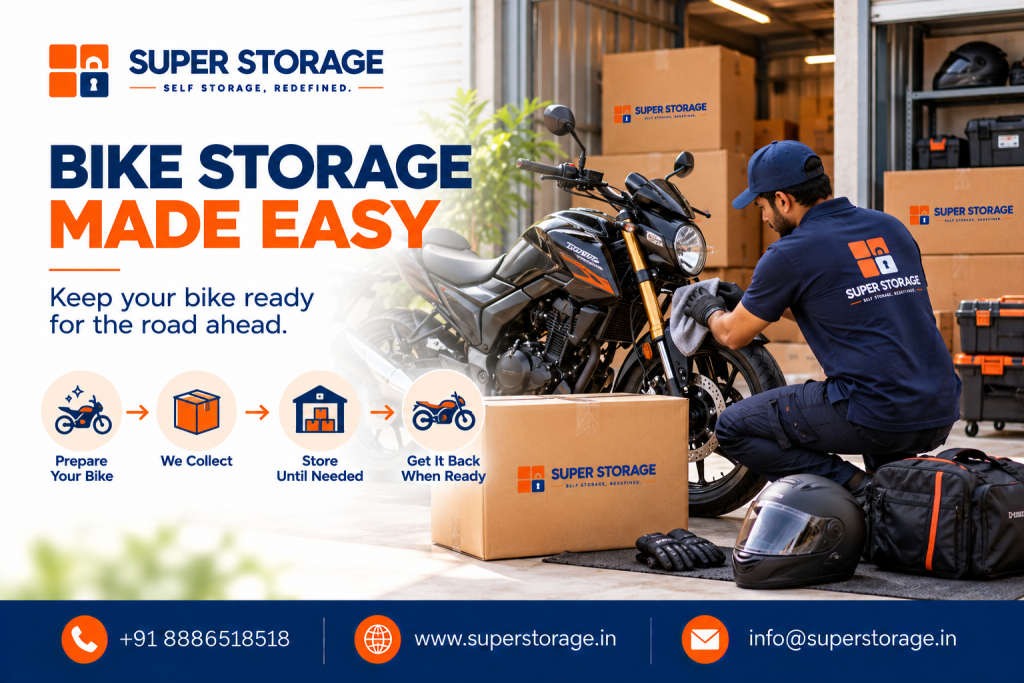
Why Is Proper Bike Preparation Important?
A motorcycle is made up of several components that may be affected when it remains unused for an extended period. Dust and moisture can accumulate on surfaces, metal parts may develop corrosion, and tyres can gradually lose pressure. The battery may also discharge, particularly if it is older or already in poor condition.
Fuel systems can present additional challenges. Petrol left in a motorcycle for a long time may deteriorate, and in some fuel systems, deposits can develop. The potential effects depend on the motorcycle’s design, fuel type, storage duration, and environmental conditions.
Proper preparation helps reduce these risks and makes returning to regular riding easier. It also gives you an opportunity to identify existing maintenance issues before putting the bike away. If you are planning to store your motorcycle while travelling or relocating, preparing it in advance can save time when you need it again.
SuperStorage can help customers discuss their storage requirements when they need additional space for personal belongings or other accepted items. Before making arrangements for a motorcycle, confirm directly with the team whether vehicle storage is available at the relevant location and what conditions apply.
Clean Your Bike Thoroughly Before Storage
The first step is to clean your motorcycle thoroughly. Dirt, mud, road salt, grease, and other contaminants can remain on the bodywork and metal components after regular riding. If left for a long time, some contaminants may contribute to surface deterioration, particularly when moisture is present.
Wash the bike using a suitable motorcycle cleaning product and follow the manufacturer’s recommendations. Pay attention to areas where dirt tends to accumulate, including the wheels, underside, mudguards, and around the chain. Avoid directing high-pressure water at electrical connectors, bearings, or other sensitive components.
After washing, dry the motorcycle completely with a clean cloth and allow moisture to evaporate from hard-to-reach areas. Do not put the bike away while water remains trapped around metal parts or electrical connections. Once it is dry, apply appropriate protection to painted surfaces and exposed metal components where recommended.
If your motorcycle has a chain, clean and lubricate it according to the manufacturer’s maintenance instructions. For shaft-drive or belt-drive motorcycles, follow the relevant maintenance guidance instead of applying chain products.
SuperStorage customers planning to keep belongings or vehicles elsewhere should prepare items before collection or placement, according to the provider’s requirements. A clean and dry motorcycle is a sensible starting point for long-term storage, but the specific vehicle preparation requirements should be confirmed with the storage provider.
Check the Engine Oil and Other Fluids
Before storing your bike, check its engine oil and other relevant fluids. Old or contaminated oil may contain combustion by-products and other impurities. Depending on the manufacturer’s recommendations and the condition of the oil, an oil and filter change before storage may be appropriate.
Review the owner’s manual to determine whether the oil should be changed before an extended period of inactivity. If a service is due, completing it before storage can help ensure that the motorcycle is maintained according to its normal service schedule.
Check the coolant level if your bike uses a liquid-cooled engine, and inspect the brake fluid and other serviceable fluids as recommended. Brake fluid absorbs moisture over time, so its replacement should follow the manufacturer’s specified service interval rather than an arbitrary storage schedule. Look for leaks around the engine, brakes, and other fluid systems, and arrange repairs before leaving the motorcycle unused.
Do not open sealed systems or attempt unfamiliar mechanical work without the appropriate knowledge and equipment. If you are unsure about the motorcycle’s condition, consult a qualified mechanic before storage.
Prepare the Fuel System
Fuel preparation is an important part of storing a motorcycle for an extended period. The best approach depends on whether the bike uses a carburettor or fuel injection, the type of fuel, and the expected storage duration.
Petrol can deteriorate over time, and fuel-related problems may develop if the motorcycle remains unused for an extended period. For some motorcycles, the manufacturer may recommend using fresh fuel and an approved fuel stabiliser. If a stabiliser is appropriate, follow the product instructions and the motorcycle manufacturer’s guidance.
Carburettor-equipped motorcycles may require specific fuel-system preparation because fuel left in the carburettor can leave deposits as it deteriorates. Some manufacturers recommend draining the carburettor for long storage periods, while other procedures may apply depending on the model. Fuel-injected motorcycles generally require a different approach, so do not assume the same procedure is suitable for every bike.
Never drain petrol into an unsuitable container or dispose of it in household drains. Fuel is highly flammable and must be handled in accordance with appropriate safety procedures. If you are unsure how to prepare the fuel system, ask a qualified mechanic.
Before arranging storage with SuperStorage, confirm whether the provider accepts motorcycles and whether there are specific requirements regarding fuel levels, leaks, or vehicle condition. These details should be settled before transporting the bike to any storage location.
Take Care of the Battery
The motorcycle battery may discharge gradually when the bike remains unused. A discharged battery may make starting difficult, and leaving certain types of battery in a depleted condition for an extended period can shorten its service life.
Check your owner’s manual for the recommended storage procedure. Depending on the motorcycle and battery type, you may be advised to disconnect the battery, remove it for separate storage, or use a compatible maintenance charger. If you use a charger, ensure that it is designed for the battery type and suitable for the charging environment.
If you disconnect the battery, follow the manufacturer’s instructions carefully. Incorrect handling can damage electrical components or create a short circuit. Keep the battery terminals clean and inspect the battery for signs of leakage, swelling, or damage. A damaged battery should be assessed by a qualified professional.
Do not leave a battery connected to an ordinary charger that is not designed for unattended maintenance charging. Charging equipment should be used according to its instructions and only in a suitable environment.
Before putting your motorcycle into storage, consider whether you will have access to an appropriate power supply and whether the storage provider permits charging equipment. If the storage location does not support battery maintenance, follow the manufacturer’s alternative recommendations.
Protect the Tyres and Prevent Flat Spots
Motorcycle tyres can lose pressure gradually, even when the bike is not being ridden. When a motorcycle remains in the same position for a long time, the tyres may also develop temporary flat spots or other pressure-related issues, depending on the tyre construction, load, temperature, and duration of storage.
Check both tyres for damage and inflate them to the pressure recommended by the manufacturer. Do not automatically use the maximum pressure printed on the tyre sidewall as the normal operating pressure; consult the motorcycle manual or manufacturer’s guidance.
Where practical, use a suitable motorcycle stand to reduce prolonged loading on the tyres, provided the stand is appropriate for your bike and the surface. If a stand is not available, periodically checking the tyre pressure and condition before returning to use is important.
Inspect the tyres for cracks, bulges, cuts, or other visible damage. If the motorcycle is stored for a very long period, have the tyres checked before riding again, even if they appear inflated.
The storage area should have a stable surface capable of supporting the motorcycle. If you plan to store the bike away from home, confirm that the facility accepts motorcycles and can accommodate the vehicle’s dimensions and weight.
Choose a Suitable Storage Location
The storage environment plays an important role in maintaining your motorcycle’s condition. Ideally, the bike should be kept in a clean, dry, well-ventilated area protected from direct weather exposure. Rain, persistent moisture, and major temperature fluctuations can contribute to corrosion or deterioration of certain components.
If you are keeping the bike at home, choose a location where it will not obstruct walkways or be exposed to accidental impacts. Avoid placing it close to open flames, heaters, or other ignition sources, particularly when fuel is present. Never run the engine inside an enclosed space because exhaust gases, including carbon monoxide, can be fatal.
If you do not have suitable space at home, you may consider a dedicated vehicle storage provider. Before choosing a facility, ask about access arrangements, environmental conditions, security measures, fire precautions, and the procedure for collecting the vehicle.
SuperStorage offers storage solutions for various customer requirements, but vehicle acceptance and specific motorcycle storage arrangements must be confirmed with the team. Do not assume that a general household storage plan includes a motorcycle. Ask about available vehicle services, permitted fuel levels, battery requirements, insurance terms, and any restrictions before booking.
Cover Your Bike Properly
A suitable motorcycle cover helps protect the vehicle from dust and accidental surface contact during storage. Choose a cover designed for motorcycles and appropriate for the storage environment. A breathable cover can help reduce moisture accumulation compared with an unsuitable cover that traps condensation.
Before covering the motorcycle, make sure it is completely dry and has cooled down after its last ride. Never place a cover over a hot exhaust or engine component. The cover should fit securely without rubbing excessively against painted surfaces or becoming a tripping hazard.
If the bike is kept outdoors temporarily, use a cover specifically designed for outdoor conditions and follow the manufacturer’s instructions. However, a cover alone does not replace the protection provided by a suitable storage environment.
Remove any loose accessories that could be lost or damaged, and keep keys, documents, and detachable components in a separate, clearly labelled place. Do not leave valuables attached to the motorcycle during storage.
Make a Final Inspection Before Leaving
Before putting your motorcycle away for an extended period, carry out a final inspection. Check for visible leaks, loose parts, tyre damage, corrosion, and any maintenance issues that need attention. Record the odometer reading and take photographs of the motorcycle’s overall condition. These records can help you compare its condition when you return.
Keep the owner’s manual, service history, and any relevant maintenance notes accessible. If you are using a storage provider, retain the booking details and confirm the process for collecting the motorcycle later.
Avoid starting the engine briefly every few days unless the manufacturer specifically recommends an appropriate procedure. Short runs that do not bring the engine fully up to operating temperature may introduce moisture into the engine and exhaust, while also failing to recharge the battery adequately. Follow the manufacturer’s guidance for long periods of inactivity instead.
If the motorcycle has been stored for several months, inspect it thoroughly before riding. Check the brakes, tyre pressure, lights, chain, fluid levels, and battery. If you have any doubts about its roadworthiness, arrange a professional inspection before use.
How SuperStorage Can Help When You Need Extra Space
Long-term travel, relocation, and changes in living arrangements can leave you with limited space for your belongings. If you need to clear space at home while you are away, a storage service may help you organise items that you do not need immediately.
SuperStorage provides storage solutions for various household and personal belongings. Customers can discuss their requirements, expected storage duration, and collection needs to understand the available services. If you need to store a motorcycle, contact SuperStorage directly to confirm whether vehicle storage is available at your preferred location and whether the facility can meet the bike’s specific requirements.
Before booking any vehicle storage service, clarify the total cost, access arrangements, vehicle acceptance policy, and applicable insurance or liability terms. Also confirm who is responsible for transporting the motorcycle and whether it must be delivered in a particular condition.
Planning these details in advance can help you choose a suitable arrangement and avoid last-minute complications when you are preparing to travel or relocate.
Conclusion
Preparing your bike for long-term storage involves more than parking it and covering it. Cleaning the motorcycle, checking its fluids, preparing the fuel system, maintaining the battery, inspecting the tyres, and choosing a suitable location can help reduce problems during an extended period of inactivity.
Always follow the manufacturer’s recommendations because storage procedures vary by motorcycle model, fuel system, battery type, and expected storage duration. If you are unsure about mechanical preparation, seek assistance from a qualified mechanic before putting the bike away.
SuperStorage can help you explore storage options when you need additional space during travel, relocation, or changes in your living arrangements. If you are considering storing your motorcycle, confirm vehicle acceptance and the specific storage arrangements directly with the team before making a booking. With the right preparation and a suitable storage plan, you can make returning to your bike more convenient when you are ready to ride again.