
Introduction
A growing business needs more than talented employees and new customers. It also needs enough physical space to support changing operations. As companies expand, offices can quickly accumulate furniture, files, equipment, marketing materials, archived documents, spare chairs, desks, electronics, promotional items, and other business belongings. Items that were once useful every day may eventually become surplus as the company changes its layout, adopts digital processes, moves to a hybrid work model, or expands into a larger office. Keeping all these belongings inside the active workplace can make the office feel crowded and leave less room for employees, meetings, collaboration, and future expansion. This is where office storage solutions can help. Instead of allowing rarely used business belongings to occupy valuable workspace, companies can move suitable items into storage and bring them back when required. At SuperStorage, we help businesses manage suitable office belongings during expansion, relocation, renovation, downsizing, restructuring, and other changing business requirements.
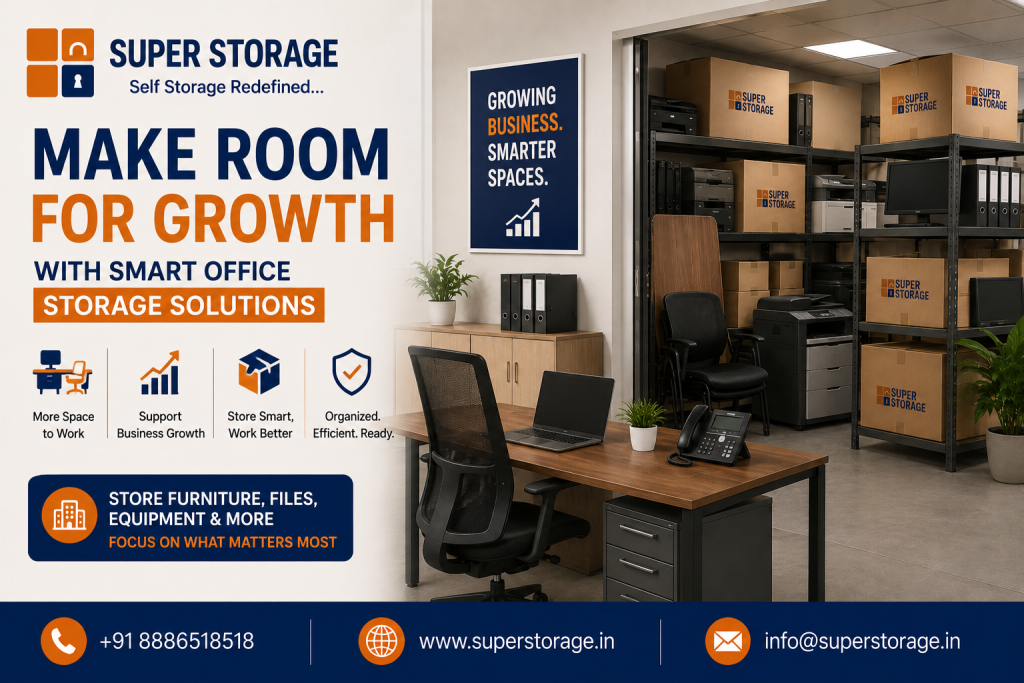
Why Office Space Matters for Business Growth
Office space plays an important role in how a business operates. Employees need enough room to work comfortably, teams need areas for collaboration, and businesses may require meeting rooms, reception areas, workstations, storage areas, and other functional spaces.
However, office space can quickly become crowded when items accumulate over time. Extra desks may remain unused after a team adopts a hybrid working model. Old chairs may be kept even after new furniture is installed. Promotional materials from previous campaigns may occupy cupboards. Archived files may fill entire cabinets.
Instead of allowing these items to take over the workplace, businesses can review what they actually need every day and move suitable surplus belongings into storage.
Storage Can Support Business Expansion
Business growth often means adding employees, equipment, workstations, and operational areas. But if the existing office is already crowded with unused belongings, adding more employees can become difficult.
Removing rarely used furniture, archived materials, and surplus equipment can create valuable floor space. This can allow a company to reorganize workstations or create additional areas without immediately moving to a larger office.
SuperStorage helps businesses manage suitable belongings so that their existing office can be used more effectively while they plan their next stage of growth.
Store Extra Office Furniture
Office furniture can occupy a significant amount of space. Desks, chairs, conference tables, cabinets, shelves, reception furniture, and workstations may no longer be needed after an office redesign or restructuring.
However, businesses may not want to dispose of perfectly usable furniture. A company may expand again in the future, open another branch, or require additional furniture for new employees.
Suitable office furniture can be stored until it becomes useful again. This approach allows businesses to keep valuable assets without allowing them to occupy the active workplace.
At SuperStorage, we help businesses manage suitable furniture during office moves, renovations, expansions, and temporary changes.
Office Relocation and Storage
Moving offices involves more than transporting desks and computers. Companies may have files, chairs, cabinets, equipment, promotional materials, meeting-room furniture, and other belongings that need to be moved.
Sometimes the new office is not ready when the old lease ends. Renovation, painting, electrical work, flooring, or interior setup may still be underway.
In such situations, moving everything directly into the new property may not be practical. Temporary storage can provide a transition point until the new office is ready.
SuperStorage can help businesses manage suitable belongings during these relocation periods.
Office Renovation Storage
Renovating an office can create temporary space challenges. Contractors may need access to floors, walls, ceilings, electrical systems, and other areas.
Leaving desks, chairs, cabinets, and other belongings inside the renovation zone can make the work more difficult. Moving everything into another part of the office may simply create clutter elsewhere.
Storing suitable furniture and business belongings outside the active renovation area can give contractors more room to work.
Once the renovation is complete, the stored items can be brought back and arranged according to the new office layout.
Make Space for New Employees
As a business grows, hiring new employees is often a positive sign. But every new employee may require a workstation, chair, storage area, computer equipment, and access to common facilities.
If the office is already full of unused furniture, preparing new workstations can become difficult.
Businesses can review old furniture and identify what is currently required. Extra desks and chairs that may be needed later can be stored separately.
This can create immediate space for new employees without forcing the company to dispose of furniture that may still have future value.
Hybrid Work and Changing Office Requirements
Hybrid and flexible work arrangements have changed how many offices use their physical space. Some employees may work from home part of the week, reducing the need for permanent individual workstations.
As a result, businesses may find themselves with surplus desks, chairs, monitors, cabinets, and other equipment.
Instead of allowing these items to remain unused, businesses can move suitable belongings into storage. If working patterns change again, the equipment can be brought back.
This provides flexibility as the company’s workplace strategy evolves.
Store Archived Files and Documents
Businesses often accumulate documents over many years. Although digital systems have reduced the need for paper, many companies still maintain physical records.
Archived documents may not be required every day, but they may need to be retained for operational, legal, financial, or regulatory reasons.
Before storing business records, companies should establish appropriate document-retention policies and ensure that confidential materials are handled according to their internal procedures and applicable requirements.
Suitable archived files can then be organized into labelled boxes and managed according to the storage provider’s accepted-item policies.
Organize Office Equipment
Office equipment can include printers, scanners, monitors, projectors, speakers, keyboards, conference equipment, and other devices.
Some may be used regularly, while others may only be needed for special projects or backup purposes.
Keeping every device inside the office can create clutter. Suitable equipment that is not required immediately can be considered for storage after following manufacturer recommendations and business data-security procedures.
SuperStorage can help manage suitable business belongings during office transitions.
Store Marketing and Promotional Materials
Businesses often accumulate banners, exhibition materials, promotional stands, brochures, display items, event equipment, and branded materials.
These items may only be required during specific campaigns, exhibitions, conferences, or events. Keeping them in active office areas throughout the year can consume valuable space.
Organizing suitable promotional materials into labelled boxes and storing them separately can free up cupboards and work areas.
When the next campaign or event arrives, the required materials can be retrieved.
Seasonal Business Items
Some businesses have belongings that are used only during certain times of the year. Festive decorations, event materials, seasonal displays, promotional equipment, and temporary furniture may be stored for most of the year.
Instead of allowing these items to occupy office space continuously, businesses can consider seasonal storage.
This can help keep the workplace focused on everyday operations while retaining items for future campaigns and events.
Office Downsizing
Not every business is expanding. Companies may also downsize because of changing operational requirements, remote work, restructuring, or cost considerations.
When moving into a smaller office, there may not be enough room for all existing furniture and equipment.
Businesses may want to retain certain items rather than dispose of them immediately. Storage can provide additional time to decide what should be retained, sold, donated, or reused.
Office downsizing storage can therefore help companies manage transitions without making rushed decisions.
Storage During Business Restructuring
Business restructuring can involve changes to departments, teams, workspaces, and office layouts. During this period, furniture and equipment may temporarily become surplus.
Instead of moving these items repeatedly around the office, suitable belongings can be stored separately.
This can create a cleaner workplace while the company determines its long-term requirements.
Creating a Better Employee Workspace
A cluttered office can make it harder for employees to move around and use shared areas effectively. Boxes stacked in corridors, unused chairs in meeting rooms, and old equipment on desks can make the workplace feel disorganized.
Removing unnecessary belongings can create a more functional environment.
Storage does not mean getting rid of everything. It simply separates everyday operational items from belongings that are not currently needed.
This can help employees use the office more efficiently.
Storage for Startups and Growing Companies
Startups often begin with limited resources and small offices. As the business grows, it may accumulate equipment, furniture, marketing materials, and inventory.
A growing company may not immediately move into a larger office. External storage can help manage surplus belongings while the company continues using its existing workspace.
This can be particularly useful during periods of rapid growth when office requirements change frequently.
E-Commerce and Business Inventory
Some businesses operate partly or entirely online and may require space for suitable inventory, packaging materials, promotional items, and supplies.
As order volumes grow, keeping everything inside the office can interfere with daily operations.
Businesses should consider appropriate storage arrangements for accepted inventory and ensure that products requiring specialized conditions are handled through facilities designed for those requirements.
SuperStorage can help with suitable business belongings according to its applicable policies.
Prepare Office Items Before Storage
Before moving office belongings into storage, businesses should create an inventory. Identify each item, its condition, and its intended future use.
Furniture should be cleaned before storage. Larger pieces may be dismantled where appropriate, with screws and fittings labelled.
Electronic equipment should be prepared according to manufacturer recommendations. Any sensitive business information should be backed up and protected before equipment is moved.
Boxes should be clearly labelled so that employees can identify their contents later.
Keep Frequently Used Items Accessible
Not everything should be moved into storage. Items that employees use every day should remain accessible.
Before storing anything, consider how frequently it is required. A printer used daily should remain in the office, while a spare printer may be suitable for storage.
Similarly, everyday files should remain accessible, while properly managed archived records may be stored separately.
This simple approach can help businesses use storage more effectively.
How SuperStorage Helps Businesses
At SuperStorage, we understand that businesses have different storage requirements depending on their size, industry, workspace, and stage of growth.
We help businesses manage suitable belongings such as office furniture, packed boxes, promotional materials, décor, equipment, archived materials, and other accepted business possessions.
Whether you are renovating an office, moving to a new location, expanding your team, downsizing your workspace, or changing your workplace model, SuperStorage can help you create additional space during the transition.
Our storage solutions in Bangalore can provide businesses with a practical way to manage belongings that are not required every day but may still have future value.
Storage as a Business Planning Tool
Storage should not be viewed only as a solution for when an office runs out of space. It can also be part of business planning.
When companies know that their requirements may change, retaining suitable furniture and equipment in storage can provide flexibility. Instead of purchasing everything again when the business expands, stored belongings may be available for future use, depending on their condition and suitability.
This can help companies adapt to changing circumstances more efficiently.
Reclaim Valuable Office Space
One of the simplest benefits of office storage is the ability to reclaim space. A room that was previously used to store old furniture can become a meeting room. A crowded corner can become a new workstation. A cabinet area filled with archived materials can be reorganized for everyday office use.
Small changes in how space is managed can make a meaningful difference to the overall workplace.
Build an Office Ready for the Future
Business growth requires flexibility. Your office today may not look the same six months or one year from now.
By separating everyday business belongings from items that are not currently needed, you can create a workplace that is easier to adapt.
Storage gives you the ability to retain suitable belongings without allowing them to limit your current workspace.
Conclusion
Office space is a valuable business resource, and using it effectively can make a significant difference as a company grows. Extra furniture, archived files, unused equipment, promotional materials, seasonal items, and other business belongings can gradually reduce the space available for employees and everyday operations.
You do not necessarily need to dispose of these belongings simply because they are not currently required. Office storage solutions can help businesses retain suitable items while creating more usable space today.
At SuperStorage, we help businesses manage suitable office belongings during relocation, renovation, expansion, downsizing, restructuring, and changing workplace requirements. From desks and chairs to packed boxes, promotional materials, equipment, and other accepted business possessions, our storage solutions in Bangalore can help businesses make better use of their existing workspace.
A growing business needs room to adapt. By storing what you do not need every day, you can create space for new employees, better collaboration, improved layouts, and future opportunities.