
Introduction
Renovating a clinic is an important step toward creating a more comfortable, organized, and functional healthcare environment. Whether the project involves updating a waiting room, expanding treatment areas, replacing flooring, upgrading interiors, improving reception facilities, or reorganizing consultation rooms, renovation requires careful planning. One of the biggest challenges during this process is deciding where to keep the furniture, equipment, files, supplies, and other belongings that normally occupy the clinic. Leaving everything in place can restrict the renovation team, create unnecessary clutter, and make it difficult to complete the work efficiently. At the same time, moving everything into another room may simply shift the problem from one area to another. Clinic renovation storage can provide a practical solution by creating additional space for suitable belongings while the renovation is underway. SuperStorage helps businesses manage suitable furniture, packed items, equipment, and other belongings during temporary changes, allowing clinic owners to focus on the renovation process.
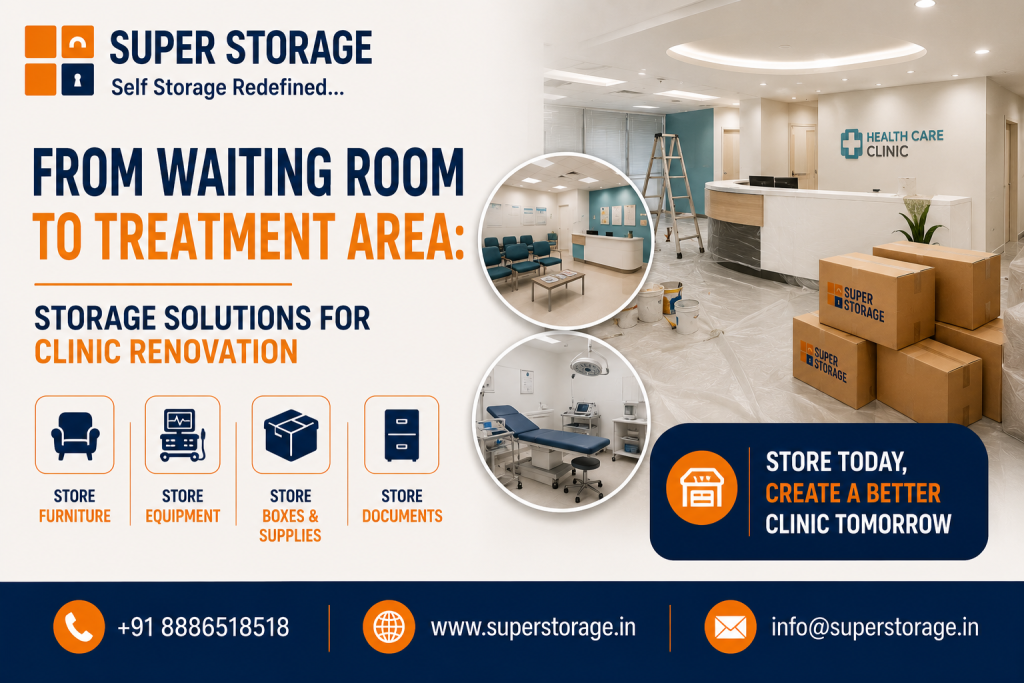
Why Storage Matters During Clinic Renovation
A clinic contains many different types of items. Waiting-room chairs, reception desks, cabinets, shelves, consultation furniture, display materials, office equipment, packed supplies, and other belongings can occupy considerable space. During renovation, these items may need to be removed from the work area to allow contractors to paint, install flooring, repair walls, modify electrical systems, or change the layout.
Simply moving everything into a nearby room may not be practical, particularly if the clinic is already operating with limited space. A separate temporary storage solution can help create a clearer working environment while keeping suitable belongings organized until the renovation is complete.
Start With a Renovation Storage Plan
Storage should be considered before renovation begins rather than after the clinic has already been filled with boxes and moved furniture. Start by reviewing the renovation plan and identifying which rooms or areas will be affected. Then determine which furniture, equipment, supplies, and other belongings need to be removed.
Create separate categories for items that will remain in the clinic, items that need to be temporarily stored, and items that may no longer be required. This can help reduce unnecessary movement and make the renovation process more organized.
At SuperStorage, we help customers manage suitable belongings during temporary changes such as renovation, relocation, expansion, and reorganization.
Clear the Waiting Room First
The waiting room is one of the most visible areas of a clinic and can contain several bulky items. Chairs, sofas, tables, reception accessories, magazines, display stands, decorative pieces, and other furnishings may need to be removed before renovation begins.
If flooring or wall work is planned, keeping furniture in the waiting room can interfere with contractors and increase the risk of accidental damage. Moving suitable items into storage can provide a clearer working area.
Once the renovation is complete, selected furniture can be brought back and arranged according to the new design. This makes waiting room storage particularly useful during clinic makeovers.
Preparing Treatment Areas for Renovation
Treatment rooms often contain furniture, cabinets, movable equipment, supplies, and other items that require careful organization. Depending on the renovation work, some items may need to be temporarily removed to provide contractors with sufficient working space.
Clinic owners should identify which equipment is essential for ongoing operations and which belongings can be temporarily relocated. Any specialized medical equipment should be handled according to the manufacturer’s instructions and applicable requirements. Storage arrangements should also be confirmed as suitable for the specific equipment before moving it.
For general furniture and suitable non-sensitive belongings, professional storage solutions can help free up treatment areas while renovation work takes place.
Store Clinic Furniture Temporarily
Clinic furniture can include reception counters, waiting chairs, examination tables, desks, cabinets, shelves, stools, storage units, and other furnishings. If the renovation involves changing the interior layout, some of these items may not have a place inside the clinic during the project.
Instead of placing furniture in hallways or unused rooms, temporary furniture storage can provide additional space. SuperStorage helps businesses store suitable furniture during renovation and other temporary transitions, allowing the clinic to use its available space more efficiently.
Renovating the Reception Area
The reception area is often one of the first areas to be renovated because it creates the first impression for patients. New counters, lighting, flooring, wall finishes, seating, and signage may all be part of the upgrade.
During this work, existing reception furniture and accessories may need to be removed. Storing suitable furniture temporarily can give contractors more room to work and make it easier to complete the renovation according to the planned design.
Once the reception area is ready, the furniture can be returned, replaced, or rearranged based on the updated layout.
Managing Files and Administrative Documents
Clinics may have a large number of administrative records, invoices, office documents, supplies, and other paperwork. However, medical records and sensitive patient information require special handling and should only be stored according to applicable privacy, legal, regulatory, and organizational requirements. A general storage facility should not automatically be assumed to be appropriate for sensitive medical records.
For non-sensitive administrative materials and suitable business documents, businesses can consider external storage when these items are taking up valuable office space. Clinics should establish clear document retention and access procedures before moving any records.
Store Non-Clinical Office Items
Not everything inside a clinic is directly related to patient treatment. Office stationery, promotional materials, spare furniture, event displays, packaging materials, old signage, unused décor, and other business belongings may also accumulate.
These items may not need to remain in the clinic during renovation. Moving suitable non-clinical belongings into storage can help create more usable space and reduce clutter around contractors and staff.
SuperStorage can help businesses manage suitable office belongings during renovation, relocation, expansion, and other workspace changes.
Renovating While Keeping the Clinic Running
Some clinics cannot completely close during renovation. Work may need to be completed in phases so that essential services continue. In such situations, space management becomes even more important.
Furniture and belongings may need to be moved between areas as different sections are renovated. Temporary storage can help keep non-essential items out of the active workspace, making it easier to rotate furniture and belongings as the renovation progresses.
A phased storage plan can also reduce unnecessary movement. Instead of moving the same items repeatedly around the clinic, suitable belongings can remain separately stored until the relevant renovation phase is completed.
Storage During Clinic Expansion
Renovation and expansion often happen together. A clinic may add new consultation rooms, treatment areas, diagnostic spaces, staff rooms, or administrative offices. During construction, existing furniture and equipment may need to be moved temporarily.
Clinic expansion storage can provide additional space for suitable items while new areas are being developed. Once construction is finished, furniture and other belongings can be reviewed and placed according to the new layout.
At SuperStorage, we help businesses manage suitable belongings during expansion so they can focus on creating a more functional workspace.
Organize Furniture Before Moving It
Before moving clinic furniture into storage, prepare it properly. Remove loose items from drawers and cabinets, clean surfaces, label components, and keep detachable parts together. If furniture needs to be dismantled, keep screws, handles, and fittings in clearly labelled containers.
Photographing furniture before dismantling can also help with reassembly. Creating a basic inventory makes it easier to identify what has been stored and determine what needs to return to the clinic after renovation.
Good organization can make the return process much faster once the renovation is completed.
Separate Essential Equipment From Storage Items
Not every clinic item should be placed into general storage. Medical devices, pharmaceuticals, biological materials, temperature-sensitive products, hazardous substances, confidential patient records, and other regulated or specialized items may require specific storage arrangements.
Clinic owners should consult manufacturers, qualified professionals, and applicable regulations before relocating specialized equipment or sensitive materials. SuperStorage can assist with suitable general household and business belongings, but specialized medical items should only be stored through arrangements appropriate for those items.
This distinction is important when planning a clinic renovation.
Store Extra Seating and Furniture
Waiting areas can require significant amounts of seating. A clinic may have chairs, benches, tables, and additional furniture that are temporarily unnecessary while the interior is redesigned.
If the new design will reuse some of these items, storing them during renovation can be more practical than selling or discarding them. It also allows the renovation team to work with more open floor space.
Once the work is complete, the furniture can be inspected and returned to the clinic if appropriate.
Temporary Storage During Painting and Flooring Work
Painting and flooring are common parts of clinic renovation. Both activities often require rooms to be cleared. Furniture left inside the area can make the work more difficult and may become an obstacle for workers.
Moving suitable belongings into temporary storage allows contractors to work with fewer obstacles. It also makes it easier for clinic owners to plan the final arrangement once the work is completed.
Temporary clinic storage can therefore be useful even for relatively short renovation projects.
Create a More Organized Reopening
Storage can continue to be useful even after renovation is finished. Once the clinic is ready to reopen, avoid bringing everything back immediately. Review the stored belongings and determine what is genuinely required.
The renovation may have changed the clinic’s layout, meaning some furniture or supplies may no longer have a suitable place. By reviewing everything before returning it, clinic owners can avoid recreating the same clutter that existed before the renovation.
This is an opportunity to create a more efficient environment from the beginning.
How SuperStorage Helps During Clinic Renovation
At SuperStorage, we understand that renovation creates temporary space requirements. Clinics and other businesses may need to move furniture, packed belongings, office materials, décor, extra seating, cabinets, and other suitable items out of their working environment.
We help customers manage appropriate belongings through storage solutions in Bangalore, making it easier to create additional space during renovation, relocation, expansion, and other business transitions.
Our role is to help you manage the belongings that do not need to remain in the active workspace. By separating these items from the renovation area, businesses can make better use of their existing premises while the project is underway.
Plan for the End of the Renovation
Before sending items to storage, think about what will happen when the renovation is complete. Create an inventory and identify which furniture and belongings are expected to return to the clinic. If the new design includes different furniture, decide whether some stored items should remain stored or be handled separately.
This forward planning can prevent unnecessary transport and make the reopening process smoother.
It is also useful to coordinate the storage timeline with the renovation schedule. If the project is expected to take several weeks, plan the storage period accordingly while allowing for potential changes to the completion date.
Make Renovation Less Disruptive
A clinic renovation can already involve noise, dust, contractors, temporary closures, layout changes, and scheduling challenges. Having furniture and belongings scattered throughout the facility can add another layer of difficulty.
By moving suitable items into storage, clinic owners can create clearer work areas and make the transition between renovation phases easier. Employees can also focus on preparing for reopening rather than constantly moving boxes and furniture around the building.
The result is a more organized renovation process and a better opportunity to create the clinic environment you originally planned.
Conclusion
Renovating a clinic is an opportunity to improve the patient experience, update the workspace, and create a more efficient environment for staff. From the waiting room to treatment areas, reception spaces, consultation rooms, and administrative offices, renovation often requires furniture and suitable belongings to be moved temporarily.
Rather than filling hallways, spare rooms, or active work areas with furniture and boxes, temporary storage solutions can provide additional space while the renovation is underway. By planning ahead, separating essential equipment from general belongings, organizing furniture, and keeping an inventory, clinic owners can make the renovation process more manageable.
At SuperStorage, we help businesses manage suitable furniture, packed belongings, office materials, décor, extra seating, cabinets, and other items during renovation and workspace transitions. Our storage solutions in Bangalore can help clinics create additional room while they focus on improving their facilities.
From waiting room upgrades to treatment-area renovations, the right storage plan can make a significant difference. Store what does not need to remain in the clinic, create room for the renovation team, and bring back the appropriate belongings when the new clinic is ready.